Also can be found on page 27 here:
Tuesday, October 19, 2010
Sunday, October 10, 2010
Writing the First Textbook on Social Media Marketing!
I’m thrilled to announce that I recently signed the contracts to write what should be the first textbook on Social Media Marketing. I will be coauthoring the book with Nick Bormann, Krista Neher, and Donald Barker. Each of us has expertise in our field, which I believe will mesh to create a textbook that will be suitable for undergraduate and graduate programs alike. Together we bring a wealth of knowledge of social media, textbook writing, and economics to the table.
A little background on what drove my father (Donald Barker) and I to pitch the idea of a Social Media Marketing textbook to Cengage Learning:
(1) I’m currently teaching a course in Social Media Marketing through Spokane Falls Community College and have to use a trade book to teach the course. While the book I found is adequate, I really wanted to find a book that covered all the platforms and provided strategy.
(2) There are a multitude of trade books about Social Media Marketing on the market but nothing quite right for a classroom.
(3) With many community colleges and graduate programs starting to offer courses (and some certificates) in Social Media Marketing, it seems like a perfect opportunity to fill the need for a textbook on the subject.
Our textbook will have an emphasis on strategy. In addition, the book will provide a variety of case studies and cover all the major social media platforms. With hard work and a little luck, we hope to have this book published in one year’s time.
Tuesday, September 21, 2010
Listening - the Start of Social Media Reputation Management
In August of 2009, a customer service catastrophe befell Maytag, when the popular author, blogger, and mom, Heather Armstrong (known as "Dooce"), vented her understandable frustration with poor customer service by tweeting to her million plus followers the nightmare she experienced in attempting to get a brand new $1,300 washing machine fixed. With her new baby laundry piling up, Dooce chronicled her repeated attempts to get Whirpool (Maytag's parent company) to fix the faulty washer. After a final clash on the phone with snide customer service representative, she advised her immense Twitter following to NEVER BUY A MAYTAG! (You can read a summary of the tale by Dooce at Containing a capital letter or two). This story became so emblematic of the power of social media that in the recently released, "Empowered," the authors (one of which coauthored the bestseller, "Groundswell") opened the book
with the tale. Although Maytag monitored Twitter for negative comments about its brand, the company failed to engage with the customer and solve the problem in timely public manner. The moral of this story is that listening to the social Web is not enough, a company must respond quickly and transparently, when its reputation and brand are under attack.
Indeed, "Empowered" followed the Maytag reputation disaster with how Best Buy avoided the same type of problem with its Twelpforce. In this second tale, a buyer of new iPhone encountered terrible customer service at a Best Buy, when his iPhone broke. The dissatisfied customer tweeted about the problem and was almost immediately contacted by the Twelpforce, a rapid Twitter response team pioneered by John Bernier. The problem was fully resolved, quickly and publicly, turning a potential Maytag-situation into a big PR win for Best Buy. Again, the message is clear, listening to the social Web is a good start, however, rapid and transparent action is a must to ensure that a company's reputation not only remains intact, but improves.
To discover how to accomplish this task on Twitter, check out the resources below:
Friday, August 27, 2010
Careers Opportunities in Social Media Marketing!
How hot is social media marketing (SMM)? According to the CMO Survey, sponsored by the Duke University Fuqua School of Business and American Marketing Association, social media spending is expected to grow by a whopping 300 percent in the next 5 years!
To learn more about the career opportunities in social media marketing, check out the following resources:
- Emerging Jobs in Social Media
- Social media careers: Education and experience are a winning combination
- Careers in Social Media Marketing
- The 9 Types Of "Social Media Experts" - Which One Are You?
- What Kind Of Social Media Positions Could You Create In Your Company?
- Social Media Jobs (Career Trends & Salary Information)
- How Much Do Top Tier Bloggers and Social Media Consultants Get Paid? We Asked Them!
Monday, August 16, 2010
Next Big Thing in Social Media!
Recently, I took some time to examine past trends in information technology. It was interesting to see what the experts have forecasted over the last couple of decades. So, how accurately have past pundits been in predicting the course of new information technologies? Back in the 1970s, expert systems were going to revolutionize the way businesses were run, acquiring and preserving corporate know-how in decision-making software. It turned out that expert systems were simply too "brittle" to capture the knowledge necessary to make decisions in complex real world situations. The limitations of logic-based machines caused them to "breakdown" when attempting to address the messy circumstances that human thinking effectively deals with every day.
Nonetheless, it is worth pointing out that there have been significant technology predictions that eventually bore fruit, such as automated speech recognition. In general, however, history hasn't been kind to futurists, especially those that have forecasted huge technological leaps in short periods. As an example, some social media pundits envision human-machine interfaces, making the Internet (and social media) an integral part of our minds (--talk about an "electronic leash"!).
With the above caveats in mind, enjoy the following provocative speculations about the future of social media.
Admittedly, most will likely turn out to be wrong or take longer than expected, and perhaps the most important ones will go entirely unforeseen by the experts. I look forward to hearing your reactions to these forecasts and, of course, your own predictions about the future of social media.
-
HTML clipboard This is the future of social media - Social CRM - the next big thing?
- A futurist’s view of the “next big thing” in social media
- The Next Big Thing in Social Media: Chatroulette
- Is Google Buzz -- The Next Big Thing in Social Media?
- Yahoo Buzz - Is It The Next Big Thing In Social Media?
- 12seconds: The Next Big Thing in Social Media?
Monday, August 9, 2010
Promoting Your Business with a YouTube Video!
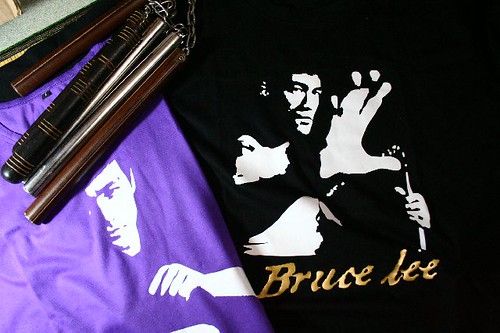
Okay, admit it, most of you have sneaked a peak at YouTube videos like the one showing Bruce Lee playing ping pong with nun-chucks.
Beyond being fun, YouTube can also be a powerful marketing tool for your business. However, you must produce something of interest that will not only attract viewership, but provide value to your company. In addition, you need to effectively promote your video on YouTube. Is it worth all this effort? YouTube is now the third most popular site on the Web, so--in a word, the answer is YES!
The following resources explain how to tap into YouTube's marketing power for your business:
Image by Dr. LoveMachine
Beyond being fun, YouTube can also be a powerful marketing tool for your business. However, you must produce something of interest that will not only attract viewership, but provide value to your company. In addition, you need to effectively promote your video on YouTube. Is it worth all this effort? YouTube is now the third most popular site on the Web, so--in a word, the answer is YES!
The following resources explain how to tap into YouTube's marketing power for your business:
Monday, August 2, 2010
Creating Engaging Social Media Content!
Image from Jack Bogdan
Perhaps the most important tenant of social media marketing is participation. Participating in the social Web can take many forms, including creating and maintaining your own blog, commenting on other blogs at places like Blogger, contributing to discussion forums and groups, such as on Yahoo! Groups, partaking in social networks, such as LinkedIn and Facebook, developing compelling YouTube videos, sharing images on Flickr, collaborating to produce Wikipedia content, ranking, tagging, and sharing your favorite sites on bookmarking services like
delicious and StumbleUpon, and using Twitter to converse with your potential customers.
So, how do you create engaging content that really "connects" with your audience on the social Web? The following resources provide a variety of ways to spark conversations on the social Web:
Monday, July 26, 2010
Putting Twitter to Work for Your Business!
Image by hellvetica
It is not readily apparent to many businesspeople how to use Twitter to influence consumers, build brands, gather customer feedback, or do much of anything beyond following the daily shopping habits of a supermodel or movie star. However, since this microblogging platform has over 190 million users, with a likely 50 million users by yearend, Twitter's popularity alone makes it worth investigating as a social media marketing tool.From small companies to mega-corporations, businesses are finding innovative ways to use Twitter to inexpensively and precisely target consumers, informing them of new products and services, and even providing product support. Take for example Microsoft's Twitter-based customer support for Windows 7, which offers real-time responses to consumer questions about Windows 7.
On the other end of the spectrum is the comparatively diminutive Web site BBGeeks, which used Twitter to "further its brand, get traffic and gain backlinks," as documented in a highly informative and detailed case study. Regardless of the size of the company, consumers must be willing to "follow" them on Twitter. The resources below present a variety of ways to accomplish this goal, as well as many other ideas for using Twitter to promote your business:
- How To Use Twitter: Get Twitter Followers & Potential Consumers!
- Twittering with Consumers
- Customer Twervice: Exploring Best Practices and Case Studies In Customer
Service Efforts Using Twitter - Ten Ways Twitter will Change American Business
- The Ten Ways Twitter Will Permanently Change American Business
- Twellow (Twitter Yellow Page Business Directory)
Monday, July 19, 2010
Creating a Social Media Marketing Plan
Image by juhansonin
Business planning is perhaps that single most important action you can take in improving the chances of success in a new venture. The same goes for social media marketing--creating a well researched and carefully thought out plan will lay the foundational cornerstone you can use to build a winning social media campaign.
A social media marketing plan consists of (1) listening to the social Web to identify your target markets and a baseline of your current Web presence, (2) establishing definitive and measurable goals, (3) designing innovative strategies to achieve these milestones, (4) selecting the appropriate social media to effectively reach your target markets, (5) crafting compelling content to attract and influencing your audiences, (6) making sure your products or services live up to their promise, (7) monitoring and measure your progress on a regular basis, and (8) reevaluating and adjusting your SMM plan to account for the ever changing nature of consumer tastes and the social Web.
The following resources explain how to put these steps into action:
- How to Listen to the Social Web
- Social Media Marketing Campaigns: How to Set Goals and Define Your Target Market
- Social media marketing strategies: Why and how
- How to write compelling content and connect with your readers
- 35 Ways to Market Content with Social Media: Promote
Articles, Blogs, Videos and More - Tools and Metrics You Need to Measure and Monitor
Social Media Success
Overview of social media marketing planning:
Monday, July 12, 2010
Implementing Social Media Marketing Campaigns!
Image Gary Hayes
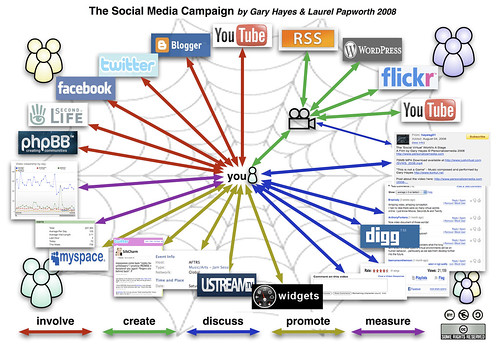
These days, everyone seems to be a trumpeting a new wiz-bang social media marketing strategy guaranteed to pump up your company's online presence. Consultants crank out social media marketing books and experts abound with advice. The bottom line is that like with any marketing effort, social media marketing campaigns must be carefully planned, executed, monitored, and tuned. The following resources provide some insights about how to accomplish these tasks:
Monday, July 5, 2010
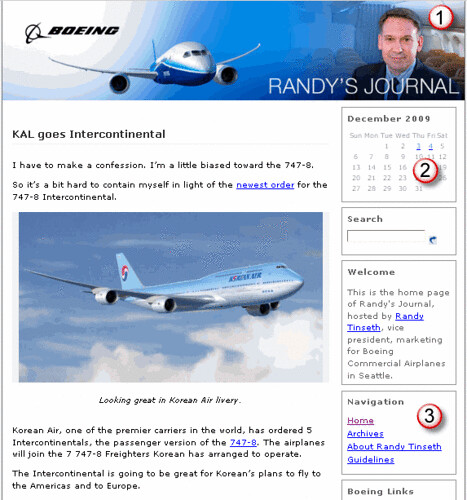
Corporate Blogging!
Image by Ivan Walsh
Contributing to the social Web is the quintessential element to any successful social media marketing effort. These contributions can range from developing a persuasive product or service YouTube video to setting up a company fan page on Facebook. One method gaining popularity is the corporate blog. A corporate blog provides a way to directly interact with your customers to craft a company personality, convey your company values and beliefs, empower customers, gather invaluable feedback, generate excitement about new products or services, and generally enhancing your company's presence on the social Web.
However, producing a corporate blog can be tricky. The key is to offer value, while not beating the consumer over the head with the "company line." You want to be informative, while avoiding the appearance of simply spouting "company propaganda." In addition, you a want to be personal, modest, and most important--tell an intriguing story. The majority of corporate blogs have trouble attracting viewers. By telling a story, you not only attract viewership, but encourage comments.
The following are useful resources for establishing an effective corporate blog, while sidestepping common traps and hazards:
Tuesday, June 29, 2010
Career Opportunities in Social Media Marketing!
How hot is social media marketing (SMM)? According to the CMO Survey, sponsored by the Duke University Fuqua School of Business and American Marketing Association, social media spending is expected to grow by a whopping 300 percent in the next 5 years!
To learn more about the career opportunities in social media marketing, check out the following resources:
- Emerging Jobs in Social Media
- Social media careers: Education and experience are a winning combination
- Careers in Social Media Marketing
- The 9 Types Of "Social Media Experts" - Which One Are You?
- What Kind Of Social Media Positions Could You Create In Your Company?
- Social Media Jobs (Career Trends & Salary Information)
- How Much Do Top Tier Bloggers and Social Media Consultants Get Paid? We Asked Them!
Tuesday, June 22, 2010
Using Wikipedia to Promote Yourself!
Given the effort required to contribute to Wikipedia and follow the many rules and restrictions, why would anyone (especially a business) take the time to become a respected member of the Wikipedia community? The answer is simple--it is establishes you as an online authority and helps endow you with credibility in specific subject categories.
To achieve this status, however, you should keep in mind that the bottom line is to contribute, don't spam.
The following resources offer tips, guidelines, and suggestions how to become an accomplished Wikipedian, along some words of caution:
- The Art Of SEO For Wikipedia & 16 Tips To Gain Respect
- How to Promote Your Company in Wikipedia
- Anyone Use Wikipedia to Market Their Product?
- How to use Wikipedia to Promote Yourself
- Wikipedia: An article about yourself is nothing to be proud of
- Wikipedia shows signs of stalling as number of volunteers falls sharply
Wednesday, June 16, 2010
Social Media vs Marketing
Joe sat in the meeting, dreaming wistfully of the days when he job as marketing director consisted entirely of identifying a market segment with unmet needs and organizing his company's marketing mix (products, distribution, pricing, and promotion) to satisfy those unmet needs better than his competitors. In other words, the good-old-days. Now this
twenty-something social media marketing consultant was telling him how his company's reputation and carefully crafted brand image were being threatened by something called the blogosphere.
With each additional word from her, the last wisps of Joe's illusion of control over medium and message evaporated, leaving him only with the cold reality of the new order--the social Web. However, all is not lost for the Joe's of the world--if they realize and capitalize on the fundamental differences between traditional marketing and social media marketing. The very definition of conventional marketing screams the word control. In the past, the marketer control everything from the decisions of who to target and how to distribute to which mediums and messages to push out. But social media is like the Wild West, where the will of the crowd rules, with mob deciding what to discuss, where to discuss it, what to say, and when to say it.
Nonetheless, by understanding the shift from control to influence, marketers like Joe can gain a foothold in a new dream--one where he can defend and possibly even enhance his company's reputation and brand image by contributing to the social Web with transparency, honesty, and a willingness to listen to the negative comments and address them in a timely manner. By relying on participation instead of interruption (i.e., advertising), Joe might be able to gain a far deeper respect for his company and its products that through conventional promotional methods.
But first, Joe must come to grips with the differences between traditional marketing and social media marketing. To help Joe (and other marketers), I have gathered together a collection of resources that explain in detail these differences. I look forward to hearing your comments about these differences and your own views of how social media and traditional marketing differ.
- 17 Key Differences Between Social Media and Traditional Marketing
- Traditional Marketing Vs Social Media
- The Dichotomy Issue: "Social Media Marketing" vs. Classic Marketing
- Social Media Vs. Traditional Marketing = Interruption Vs. Participation
- Marketing Tactics vs. Social Media Strategy
- What’s the difference between Social Media Marketing and Traditional Marketing?
- Integrating Social Media into Traditional Marketing Communications
- Social Media vs Traditional Media FAQs
Sunday, May 23, 2010
Social Media Marketing Ethics
In the "good old days," marketers and public relations professionals could have "ethical lapses," and employee less than the most scrupulous methods in obtaining results for their companies, clients, and themselves, with little chance of getting caught. No longer...
The advent of the social Web has made dishonest marketing and PR practices difficult, if not impossible, to perpetrate--without eventual detection. For example, a 2006 Osterman Research report (commissioned by BoldMouth) found that it was commonplace for companies to “incentivize” bloggers and influential discussion forum users to post positive reviews about a product or service. These incentives often took the form of giving the blogger the product or service for free in exchange for a glowing assessment.
However, in today's online world, where Google records almost every scrape of information, including social news and gossip, such deceptions are usually uncovered, resulting in massive condemnation by online communities that not only cancel out any gains made by the unethical behavior, but likely cause irreparable harm to the reputation of the perpetrator. When an individual garners this level of mistrust and negative publicity, it is almost always guarantees a detrimental financial impact.
Moreover in October 2009, a WSJ article revealed that, "New guidelines released by the Federal Trade Commission say bloggers must disclose any money or freebies they receive in exchange for writing product reviews." The rules extend to Facebook, Twitter and other social media portals. Bloggers who choose to continue to take payola for favorable reviews risk not only being ostracized by the very communities they need to survive, but now face running a foul of FTC rules and the consequent legal repercussions.
So, it turns out that in social media marketing, mom was right, "Honesty is the best policy." By creating authentic and genuine content, disclosing who are in online conversations, and being transparent (revealing any interest you have in products or services), you will gain the respect of the community where you operate and eventually the members will trust your opinions, which vastly improves your odds of influencing people into making purchase, subscribing to a newsletter, and so on (i.e., conversions).
The resources below provide further tips on how to be a successful social media marketer by following ethical behavioral guidelines:Friday, May 7, 2010
Using Flickr to Promote Your Business!
Flickr is an image sharing service, where many artists and photographers upload their work for free. It is owned by Yahoo!, which Terms of Use explicitly prohibits blatantly exploiting Flickr for any commercial purposes. As an example, uploading a photo that advertises your Web site, company, brand, product, or service would violate this agreement and would likely anger the active Flickr community.
So, how can a business or individual use Flickr to promote themselves? By becoming an active Flickr member and contributor, you can use the following strategies to reap marketing benefits without stepping on anyone's
toes. First, you can use your Web site address (e.g., www.SocialMediaMarketingResources.info or
www.MelissaBarker.com ) as your Flickr screen name, which makes every image you post an advertisement for your Web site. Second, create image tags (descriptive keywords) that include your company, brand, or product name.
toes. First, you can use your Web site address (e.g., www.SocialMediaMarketingResources.info or
www.MelissaBarker.com ) as your Flickr screen name, which makes every image you post an advertisement for your Web site. Second, create image tags (descriptive keywords) that include your company, brand, or product name.
Third, include your company information in your Flickr profile. Fourth, link all the images you post on Flickr back to your Web site or blog. That way, people who find your photos can follow the link back to your site, which can increase traffic and, hence, your search engine rankings. Finally, post your images using the Flickr Creative Commons (CC) license, which encourages Web site owners and bloggers to use your images to spice up their sites. The CC license requires sites that use Flickr images to credit their creators by linking back to their Flickr "photostreams." This provide yet another method to promote yourself or your company on Flickr.
The following resources provide details and many more ideas for using Flickr to promote your Web site, company, brand, product, service, or blog:
Wednesday, April 21, 2010
Targeting Social Media Markets
Image by partymonstrrr
Perhaps the least discussed and most misunderstood topic in social media marketing is the identification of who your social media audience. There is even disagreement about whether this topic worthy of discussion. Some argue that it makes no sense to attempt to segment your market because those interested in your content will naturally (organically) find you on the social Web, while others believe properly targeting your audience is the key to success in a social media marketing campaign.
As an example, Forrester Research has developed a sophisticated Social Techno-graphic Profile, which classifies market segments not only by traditional demographic and geographic means, but also by the roles people play in social media, such as content creators, critics, collectors, joiners, and spectators. This approach to target marketing social media participants is carefully explained and supported with cases by Josh Bernoff and Charlene Li in their book Groundswell. The power of this model rests on the notion that once a company identifies their audience's makeup and level of participation in the social Web, then the organization can optimize its efforts by focusing on the social media platforms where potential customers are likely to hang out and tailor its approach to the type and level of involvement the target market is likely to engage in.
Whether you see targeting in social media marketing as a waste of time or a valuable tool to avoid wasting time, the following resources will provide insights worth your time. I look forward to hearing your ideas and opinions on the subject.
Saturday, April 3, 2010
Social Media Marketing Success Stories
Image by ThomasThomas
"Not everything that counts can be counted, and not everything
that can be counted counts." -- Albert Einstein
Albert Einstein had the above message hanging on a sign in his office at Princeton. Why? Because he understood (better than perhaps anyone else) that not everything can be quantified. Success in social media marketing certainly falls into this category. No amount of number-crunching can guarantee a home run in every social media marketing campaign. In other words, trial-and-error will always be a necessary part of any social media effort.
So, how can you increase your odds of success in your social media campaign? One way is to look at what has worked for other companies, organizations, and individuals. The following links provide a plethora of social media marketing success stories and case studies. I would love to hear what you think is the most important lesson these stories and studies have to teach us about how to be effective and efficient. In addition, if you have a story to share, please share it with us!
- Social Media Marketing Success Stories
- 5 Social Media Marketing Case Studies
- A Successful Facebook Marketing Campaign
- How Social Media Marketing is Helping One Toyota Dealer
- CurbsideCupcakes.com: Success in Using Social Media
- Ford Social Media Marketing Success Story
- Social Gaming: 2010 Social Media Marketing Success Story
- Social Media Case Studies SUPERLIST
- Social Media Case Studies
Thursday, March 18, 2010
Using Bookmarking Sites to Promote Your Business!
To use a social bookmarking site, you must register. Popular social bookmarking sites include Delicious, StumbleUpon, Digg, FuzzFizz, Netvouz, Newnooze, Jumptags, and Wikio.
By having quality, relevant, useful, and unique content on your Web site or blog, you can gain votes, which will move your links up in the social bookmarking rankings. Just like with search engine results, higher rankings can translate into additional traffic to your site or blog and, hopefully, more conversions (e.g., sales, subscriptions, etc.). Another strategy to improve your site ranking is to have your friends vote for your site links.
The following resources provide a variety of ideas and suggestions for using social bookmarking sites to promote and increase your business:
- 3 Benefits Social Bookmarking Offers to Online Businesses
- Drive Massive Traffic to Your Site Using the Power of Social Bookmarking
- How to Use Social Bookmarking to Promote Your Small Business
- How to use Social Bookmarking to Promote your Business
- Top 20 Most Popular Social Bookmarking Websites
- Benefits of Using Social Bookmarking Sites
Tuesday, March 2, 2010
Creating Compelling Social Media Content
Image by Martin Kingsley
Write it and they will come. Well, not really. Before attempting to create compelling content, you must think about how people will find it. Most Web site traffic comes through search engines, though, recommendations on social portals are playing an increasing role in attracting attention. Clearly identifying the nature of your content with a relevant title and using the right keywords in the piece are a good start at search engine optimization (i.e., getting ranked well in search engine results).
Once Internet denizens find your blog post, article, Facebook page, etc., you need to work at getting them to invest the time to read the content. The easiest way to draw people in is to give away something for free within the post, such as product discounts, MP3s (songs), and so on. Okay, you are buying readership, but in this case the ends do justify the means!
Another approach is to provide useful tips, such as the "Best of...", Worst of...", "Top 10...", or "Five Questions People Forget to Ask..." Or offer a collection of valuable resources (like this blog? ;-) and perhaps the biggest hook, tell a story that stirs emotions (e.g., the small business that beat the odds, the product that deliveries amazing value, etc.).
The following resources explore lots of other valuable tips and suggestions for generating compelling content:
- The five factors of compelling content
- How to Get in Tune with Your Readers [and Produce Compelling Content]
- The Content Marketers - List of "How To" Blog Posts
- Five Secrets to Writing Great Blog Content
- How Twitter Content Can Be Simple and Compelling
- Are you creating compelling online video content? Why not?
- Creating Content for Social Media Session - IM Spring Break
- How To Create Compelling Social Media Profiles
Wednesday, February 17, 2010
Driving Conversation with Article Directories
Image by vikram.prashant
Article directories are another incredibly effective way to promote your Web site for free. Article directories are public content depositories, where you can submit articles and Web site owners can pick them up for placement on their own sites. Since there are tens of thousands of ezines (electronic magazines) and other content-heavy sites, the requirement is a never ending for a fresh stream of articles to attract viewership, links, and gain high search engine rankings.You can generate a large number of relevant links back to your site or blog by writing unique articles and submitting them to these article directories. If you follow the rather strict and lengthy submission guidelines at these article directories and create timely, catchy and well-written stories, your articles are likely to be approved and made available for use by ezines and other sites. If you include links back to your site in the articles, this can create hundreds, even thousands, of inbound links to your site or blog, which can help improve your ranking in search engine results. Ranking at the top of Google search results pages can translate into significant traffic increases to your site or blog and, hence, conversions (i.e., sales, subscribers, viewers, etc.).
The following resources explain why and how to use article directories for promotion:
- Promote your Business Through a Directory Submission Service
- Why you should use Article Directories to Promote Your Website
- Benefits from Promoting Your Business through Articles
- How to Use Article Directories: Reap the Benefits of Wide Exposure to Your Website
- Benefits of Submitting Articles
- 5 Easy Ways to Promote Your Ezine Articles
- Top 25 Article Directories and Free Content Sites Ranked by Alexa and PageRank
- Directory of Article Directories (scroll down to see list)
Tuesday, January 26, 2010
Putting Podcasting to Work for Your Company
A podcast is a series of prerecorded audio or video files stored on your Web site that users can subscribe to and receive on regular intervals. For a business, a podcast provides the unique opportunity to increase your reach and visibility in promoting a brand, product, or service, as well as building customer loyalty. However, podcasts are only useful if you have something of value to say or show and are willing to dedicate the resources to produce high-quality content.
Whatever your business, a little careful thought (and some inspiration) will help you find creative, attention grabbing, and interesting ways to present your topics using audio and video podcasting, which can help you promote your business. For example, if you sell nuts (the kind you eat), you might create a video podcast series that begins with the care and quality that does into growing your delectable treats, followed by podcasts showing the processing and then the colorful packaging of your assortments. Be sure to make the video (or audio) podcasts fun as well as informative.
The following resources provide suggestions for using podcasting to promote your business, along with examples of the best podcasts:
Whatever your business, a little careful thought (and some inspiration) will help you find creative, attention grabbing, and interesting ways to present your topics using audio and video podcasting, which can help you promote your business. For example, if you sell nuts (the kind you eat), you might create a video podcast series that begins with the care and quality that does into growing your delectable treats, followed by podcasts showing the processing and then the colorful packaging of your assortments. Be sure to make the video (or audio) podcasts fun as well as informative.
The following resources provide suggestions for using podcasting to promote your business, along with examples of the best podcasts:
- How to use podcasting to promote your business
- Using Podcasting to Promote Your Business
- Promoting Your Business With Podcasts
- Duct Tape Marketing Podcast
- Online Visibility Tip: Create a Video Podcast
- 7 Keys to Promoting Your Podcast
- 9 Ways to Promote Your Audio/Video Podcast Online
- 50 Social Media Podcasts
- 100 Best Small Business Podcasts 2009
Monday, January 4, 2010
Using Google Alerts to Monitor the Social Web
This year has seen an explosion in growth of the social Web. According to a recent study from Forrester Research, more than four out of five online adults in the U.S. now participate socially. Nielsen Online estimates that, "Twitter alone grew 1,382% year-over-year..." and Technorati indexes more than 100 million blogs, with over 100 thousand new ones appearing each day.
With such astronomical increases in social media, how can a company hope to navigate through this ever expanding sea of content to find and track its presence online? In my last post, I showed you how to use RSS to monitor the social Web. Now we turn our attention to Google Alerts, which provide a highly focused and targeted means to keep tabs on mentions of your brand and products.
Google Alerts automatically search the Web, videos, images, audio, blogs, and so on to find and notify you of new content via the Google Reader or email updates, avoiding the need to conduct these searches manually. To set up Google Alerts, simply to to Google, click the more link, even more link, and Alerts. The screen shown below appears.
To use Google Alerts to monitor the social Web, perform these With such astronomical increases in social media, how can a company hope to navigate through this ever expanding sea of content to find and track its presence online? In my last post, I showed you how to use RSS to monitor the social Web. Now we turn our attention to Google Alerts, which provide a highly focused and targeted means to keep tabs on mentions of your brand and products.
Google Alerts automatically search the Web, videos, images, audio, blogs, and so on to find and notify you of new content via the Google Reader or email updates, avoiding the need to conduct these searches manually. To set up Google Alerts, simply to to Google, click the more link, even more link, and Alerts. The screen shown below appears.
steps:
- In the Search terms text box, type in the keywords, phrases, and other operators necessary to locate the content you seek (--just like you would do in a normal Google search). For example, if wanted to keep tabs a new mentions of a brand name like Hershey's Chocolate, you could enter: "Hershey chocolate". Of course, you could narrow the search to spot negative comments about the brand by adding perjorative keywords, such as "sucks," "poor quality," "inferior," "tastes bad," and so on. Or the
inverse, if you want to focus on finding positive remarks, then you could include such keywords as "tastes great," "quality chocolate," "tasty treat," "yummy," etc.
- The default setting for the type of media to be searched is Comprehensive. The other media options are News, Blogs, Web, Video, and Groups. However, you will almost always want to leave the media type selection set to Comprehensive, unless the number of results are excessive. In which case, you should set up separate Google Alerts for each media type.
- Choose how often you would like receive alerts, "as-it-happens," "once a day," and "once a week." In this fast past business climate, “as-it-happens” is the most appropriate.
- The last step is to enter the email where you want the alerts sent. If you want to manage multiple alerts or receive your updates in your Google Reader, then you will need to create a Google Account.
- To complete the process, click the Create Alert button.
You can also use Google Alerts to monitor your competitors' brands and products. You can also use this service to measure your personal Web presence.Google Alerts offer one of the quickest and least expensive ways to monitor a social media marketing campaign.
The following resources provide further details regarding Google Alerts and other social media monitoring tools:
Subscribe to:
Posts (Atom)